Business
How Napkin AI is Transforming the Way You Organize Information

In the modern digital era, the amount of information Napkin AI we generate daily is staggering. Professionals, researchers, and teams are constantly challenged to capture, organize, and extract value from this information efficiently. Traditional note-taking methods, spreadsheets, or even standard document management tools often fall short when it comes to handling large volumes of knowledge in a meaningful way. This is where Napkin stands out as a transformative tool. Napkin is an AI-powered knowledge management platform that enables users to organize information, uncover insights, and make smarter decisions faster. By combining advanced artificial intelligence with intuitive knowledge mapping and collaboration features, Napkin has redefined how people interact with data and information in both professional and academic contexts.
Understanding Napkin AI
Napkin AI is designed to go beyond simple note-taking. It leverages machine learning and AI algorithms to analyze data, understand context, and generate actionable insights. Unlike traditional tools, which require users to manually organize notes or documents, Napkin automates much of the process. Users can input information from various sources, including PDFs, research articles, spreadsheets, and web content. Napkin then structures this data intelligently, identifying relationships between concepts and creating a visual knowledge map that is easy to navigate. This approach not only saves time but also allows users to see patterns and connections that might otherwise be missed.
Napkin AI is ideal for individuals and teams who deal with complex information on a daily basis. Whether it is researchers managing hundreds of academic papers, business professionals tracking market trends, or teams coordinating project knowledge, Napkin ensures that information is accessible, contextualized, and actionable.
Key Features of Napkin AI

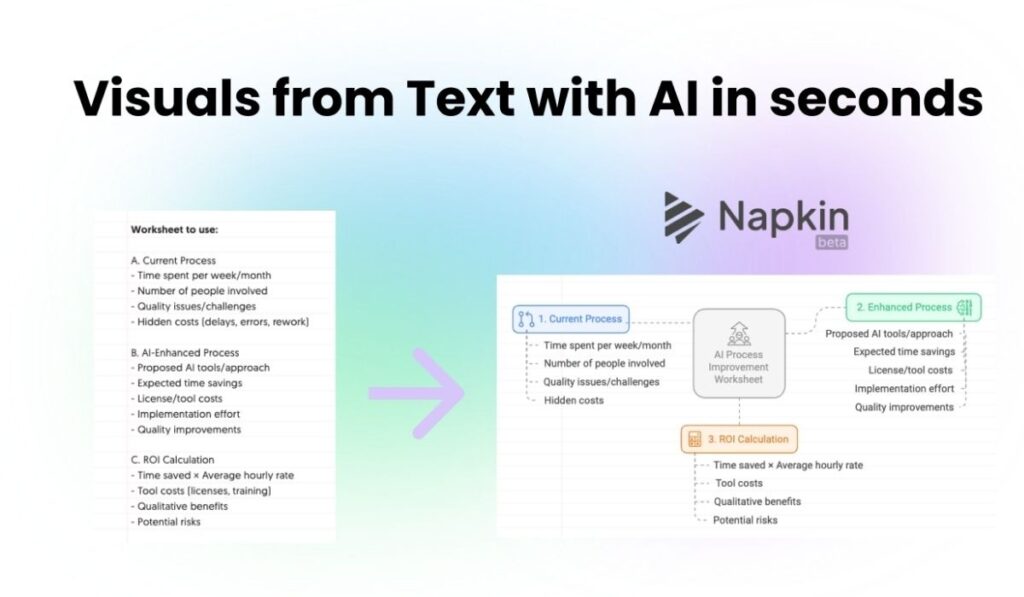
Napkin AI offers a robust set of features that make knowledge management smarter and more efficient. One of its core features is AI-powered summarization. Users no longer need to read lengthy documents to extract important insights. Napkin can automatically generate concise summaries of articles, reports, or research papers, highlighting key points and saving users significant time.
Another essential feature is semantic search. Unlike traditional keyword-based search tools, Napkin understands the meaning and context of queries. This allows users to find relevant information quickly, even if they use different terms or phrases than those present in the original documents.
Knowledge mapping is another distinguishing feature. Napkin AI can visualize relationships between notes, concepts, and documents, helping users see connections and patterns across their data. This visual approach simplifies complex information and enhances understanding.
Napkin also supports collaboration. Teams can share insights, annotate documents, and work together in a centralized knowledge hub. Integration with other productivity and knowledge management tools ensures that workflows remain seamless, and no critical information is lost.
How Napkin AI Enhances Productivity
One of the most significant advantages of Napkin AI is its ability to improve productivity. Traditional knowledge management processes can be time-consuming and mentally taxing. Searching for specific information in a large dataset, reading lengthy reports, or manually connecting related notes can take hours. Napkin automates many of these tasks.
With AI-powered summarization and semantic search, users spend less time looking for information and more time acting on it. Knowledge mapping reduces cognitive load by presenting data visually, making it easier to understand complex relationships. For teams, the collaborative features mean that everyone stays on the same page without extensive meetings or repetitive explanations. This efficiency allows individuals and organizations to focus on strategic thinking, creative problem-solving, and informed decision-making rather than administrative tasks.
Applications of Napkin AI Across Industries
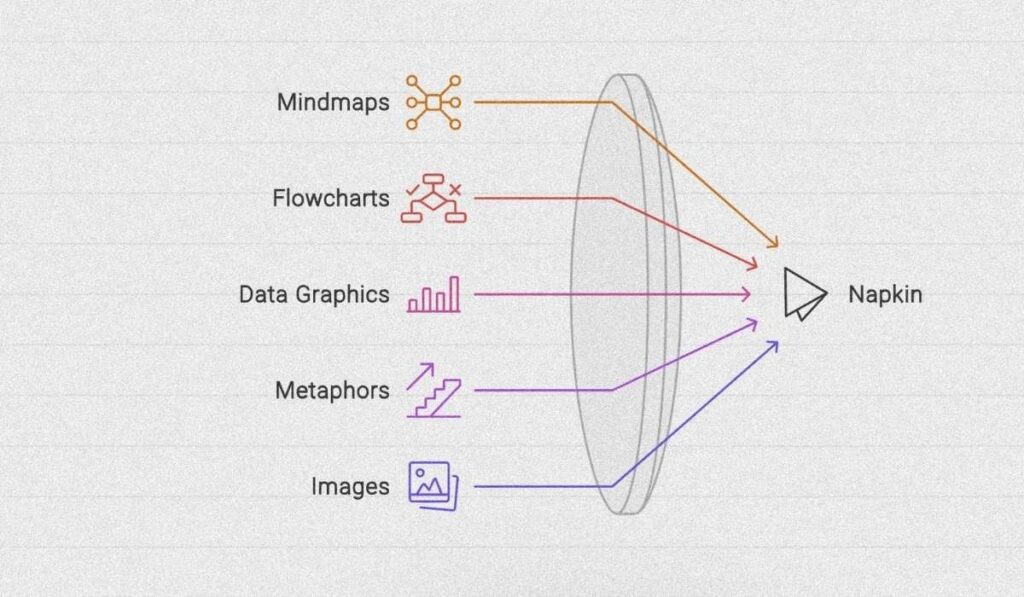
Napkin AI’s versatility makes it suitable for a wide range of industries and use cases. In academia and research, Napkin helps researchers manage large volumes of literature, extract key insights, and connect ideas across studies. This capability accelerates literature reviews, hypothesis generation, and project planning.
In corporate environments, Napkin AI acts as a centralized knowledge repository, allowing employees to quickly find information, understand context, and make better decisions. Marketing teams can use Napkin to track trends, summarize competitor reports, and create high-quality content efficiently. Project management teams benefit from knowledge mapping and collaboration features, which streamline communication and ensure critical knowledge is captured and shared effectively.
Content creators also find Napkin AI invaluable. By summarizing information and uncovering hidden connections, creators can develop more informed content, improve research accuracy, and accelerate content production workflows. These applications highlight Napkin potential to transform how knowledge is captured, shared, and utilized across sectors.
Benefits of Using Napkin AI
Using Napkin AI provides a range of benefits for both individuals and organizations. One of the most obvious is enhanced decision-making. By presenting information in a contextualized, organized manner, Napkin helps users make more informed and confident choices.
Time efficiency is another critical benefit. The automation of summarization, search, and knowledge mapping reduces manual work and frees up valuable time for strategic tasks. Knowledge retention is improved through visual maps and AI-generated summaries, ensuring that critical insights are not lost or overlooked.
Collaboration and transparency are also strengthened. Teams can work together in a unified knowledge hub, share insights, and track progress without confusion. Overall, Napkin transforms knowledge management from a passive activity into an active strategic tool that drives productivity and innovation.
How Napkin AI Differs From Traditional Tools
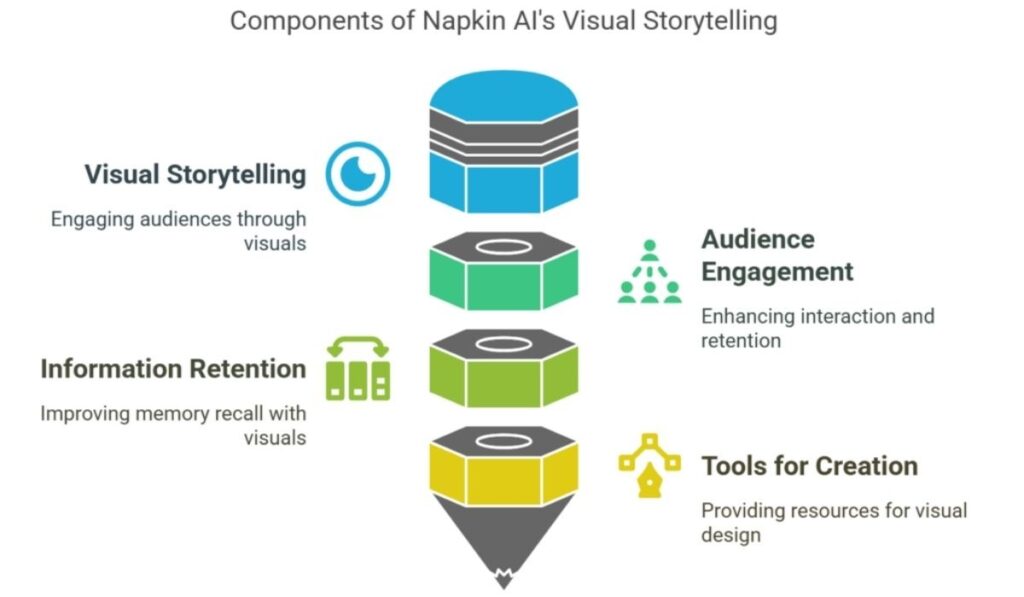
While many note-taking and knowledge management tools exist, Napkin AI differentiates itself through AI-driven intelligence and usability. Traditional tools rely heavily on manual input and keyword-based search, making it difficult to find and connect related information efficiently. Napkin understands the meaning behind data, enabling semantic search, relationship mapping, and automated summarization.
The ability to visualize knowledge and uncover hidden patterns sets Napkin AI apart from conventional solutions. Users are not just storing information—they are actively discovering insights and making smarter decisions. This combination of AI intelligence and practical usability makes Napkin a cutting-edge tool in the knowledge management landscape.
Getting Started With Napkin AI
Getting started with Napkin AI is simple. Users begin by importing existing documents, notes, and data sources into the platform. Napkin analyzes the information, creating a structured knowledge base and visual maps. From there, users can perform searches using natural language queries, generate summaries, and explore relationships between concepts.
The platform is designed for ease of use, making onboarding straightforward even for those unfamiliar with AI tools. Step-by-step guides and intuitive interfaces ensure that users can quickly leverage Napkin features for maximum productivity. Regularly updating and adding new information enhances the value of the knowledge base over time.
Tips for Maximizing Napkin AI
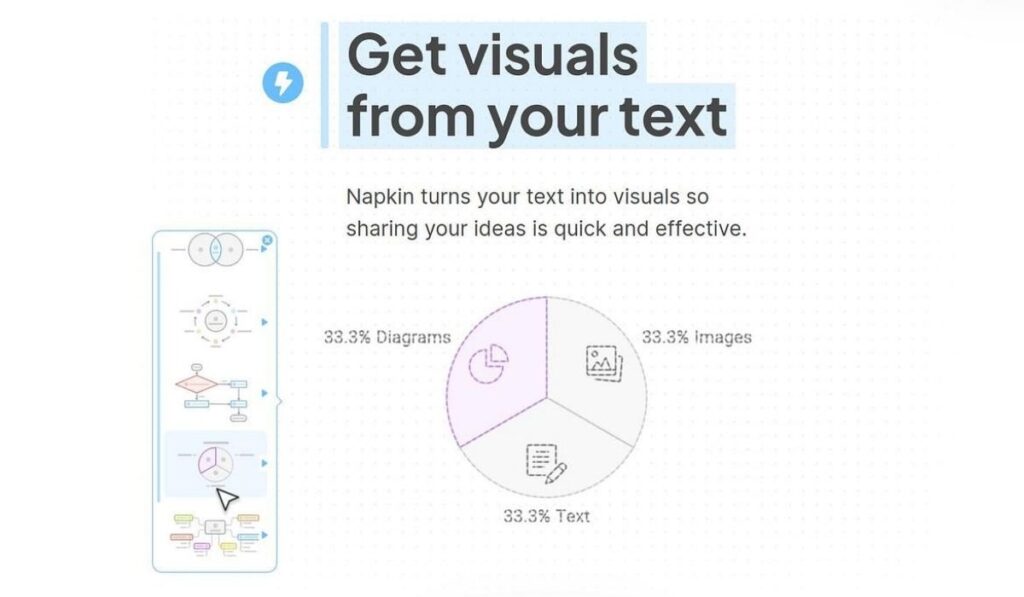
To fully benefit from Napkin AI, users should adopt best practices for knowledge management. Regularly inputting and updating information ensures that the knowledge base remains current and accurate. Utilizing semantic search effectively can uncover hidden insights and relationships across documents.
Teams should take advantage of collaborative features, sharing insights and annotations to create a unified understanding of complex topics. Visual knowledge mapping should be explored to identify patterns, connections, and gaps in information. By following these practices, users can maximize the productivity and decision-making benefits of Napkin AI.
The Future of Knowledge Management With Napkin AI
As artificial intelligence continues to evolve, Napkin AI is poised to play an increasingly central role in knowledge management. Future developments may include predictive analytics, deeper integration with other AI tools, and enhanced contextual understanding. These innovations could further automate knowledge analysis and insight generation, making knowledge more actionable than ever before.
Napkin AI represents a shift from passive storage of information to active utilization of knowledge. By combining AI intelligence with intuitive design and collaboration tools, Napkin is helping individuals and organizations navigate the complexity of modern information landscapes.
Conclusion
Napkin AI is more than a knowledge management tool—it is a comprehensive AI-powered solution designed to transform how information is captured, organized, and utilized. By combining advanced AI features such as semantic search, automated summarization, and knowledge mapping with collaboration capabilities, Napkin empowers users to make smarter decisions, enhance productivity, and uncover hidden insights. Whether you are a researcher, professional, content creator, or team leader, Napkin provides the tools to manage knowledge efficiently and strategically, ensuring that information becomes a source of actionable intelligence.
Frequently Asked Questions
1. What is Napkin AI used for?
- Napkin AI is used for organizing, analyzing, and extracting insights from knowledge and information using AI-powered features such as summarization, semantic search, and knowledge mapping.
2. Is Napkin AI suitable for teams?
- Yes, Napkin AI includes collaboration tools that allow teams to share knowledge, annotate insights, and work collectively on projects.
3. Can Napkin AI summarize large documents?
- Absolutely. Napkin AI’s AI-driven summarization feature can process lengthy documents and highlight key points for quick understanding.
4. What makes Napkin AI different from other note-taking tools?
- Unlike traditional tools, Napkin AI uses AI to understand context, map knowledge relationships, and provide actionable insights rather than just storing information.
5. How do I get started with Napkin AI?
- Getting started involves importing your notes or documents into the platform. Napkin AI will analyze the data, allowing you to use its semantic search, summaries, and knowledge mapping features.