Celebrity
Lisa Moorish: 7 Amazing Facts About the Incredible Model and Mother

Some people enter public life through one famous connection, and then spend years showing that there was always much more to their story, and that is certainly true of Lisa Moorish. She is widely known as the mother of model Molly Moorish Gallagher, but long before that connection made headlines she had already built a music career that began in her teens, crossed acid house, pop, Britpop and indie rock, and then returned, decades later, with new songs. Her life is a reminder that a mother in the news is also a person with her own tastes, work and history, and that history deserves attention on its own terms.
What makes the story of Lisa Moorish so compelling is its range, because few British singers have moved so freely between scenes that are usually kept apart. She recorded club music with Detroit techno pioneers, sang pop under a shortened name, provided backing vocals for some of the biggest Britpop bands, and then fronted her own electro-punk band, each time bringing a distinctive voice and attitude. She did so without becoming a household name in the way some of her collaborators did, yet musicians who worked with her have remembered her contribution, and her later return to recording suggests a creative drive that never fully left her.
Table of Contents
The public focus on Lisa Moorish as a mother is understandable, because her daughter Molly, born in 1998, has become a successful model in her own right, and the story of their family has been covered widely. But reducing her to that role alone would miss the point of her career, and it would also miss the way she raised her children while keeping music close, even during years when recording took second place to family life. This article therefore looks first at her own work, her early years in South London, and her later return, before turning to the family story that brought her wider attention.
Growing Up in Brixton and Finding Music Early
The early life of Lisa Moorish began in Walworth, London, where she was born on 16 January 1972, and she grew up in Brixton, South London, a neighbourhood with a rich musical culture. Her father Henry Watt was Black Jamaican, described as mixed with Irish, Scottish and Asian heritage, while her mother Iris was English, from Middlesbrough, and she was raised by her mother and aunt after her father left the family. Brixton in those years was full of sound systems, record shops and community music, and for a child with a natural interest in singing, that environment was an education in itself, even before any formal training.
Music came early for Lisa Moorish, who knew by the age of seven that she wanted to sing, and who was introduced to live gigs through her mother’s partner, a lighting technician for the reggae band Steel Pulse. At twelve she toured the United States with the band while they supported Herbie Hancock, an experience that would be extraordinary for any young teenager, and one that gave her a first taste of life on the road. Those early encounters with professional musicians taught her how a show is put together, how a band works as a team, and how an audience responds to confidence, lessons that stayed with her when she began recording herself.

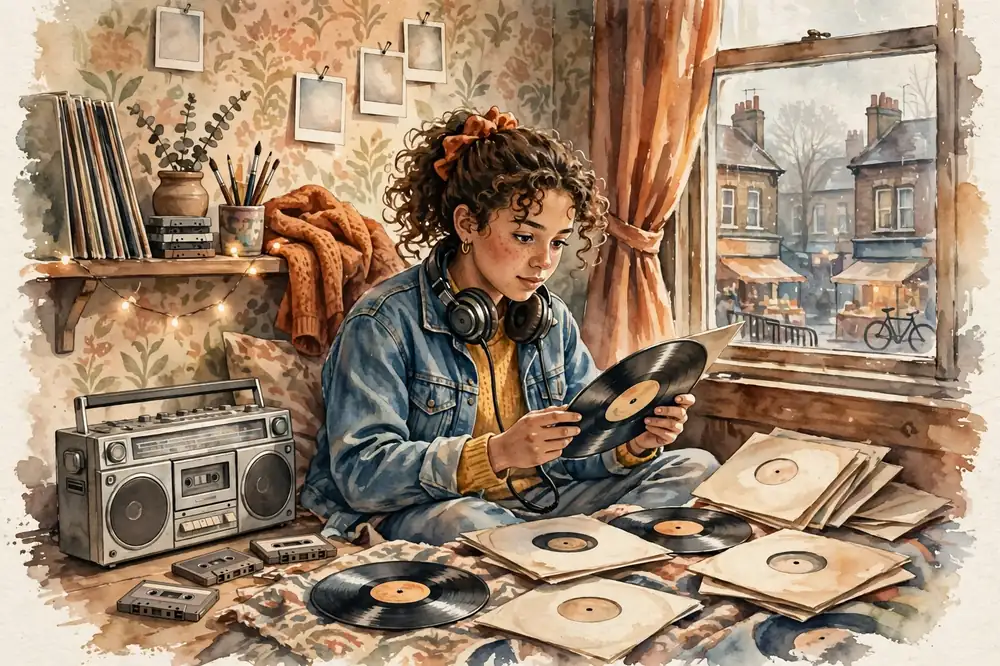
A teenage breakthrough followed, and Lisa Moorish began her musical career in 1989, aged seventeen, when she signed to Jive Records, after an agent connected with the pop group Bros helped her secure the deal. Her first exposure to club music came through Detroit techno pioneers Juan Atkins and Kevin Saunderson, with whom she recorded Rock to the Beat, a track that fed into the UK acid house explosion of the time. For a seventeen-year-old from Brixton, working with American electronic pioneers was a remarkable start, and it placed her at the centre of a youth culture that was changing British music, even if mainstream fame did not follow immediately.
Solo Singles, Pop Years and Backing Vocals
The early solo career of Lisa Moorish moved through several labels and styles, reflecting both her versatility and the fast-changing music industry of the early 1990s. After Jive, she signed to Polydor in the early 1990s under the name Lisa M, and later moved to Go! Discs, where she released tracks that brought her wider attention, including Mr Friday Night. She also recorded I’m Your Man, a duet with George Michael, a collaboration that showed how highly she was regarded by established stars, even when chart success was modest, and that gave her a place in pop history that many singers never achieve.
During the Britpop years, Lisa Moorish became a valued backing vocalist, singing on tracks by Oasis, Blur and Ash, three bands that defined British guitar music in the mid-1990s. Her work on an acoustic version of Oasis’s Fade Away is often cited in profiles of her career, and it illustrates how session and backing work can shape famous records without the singer becoming famous herself. Backing vocals demand precision, blend and musical judgement, because the singer must support the lead without overshadowing it, and her repeated hiring by major bands suggests she was trusted in studios where time and reputation mattered greatly.
A spell as a singer in the public eye also brought Lisa Moorish into contact with modelling and image work, which is why some profiles describe her as a model as well as a singer, although music remains the best-documented part of her career. In the 1990s, pop singers were expected to look as well as sound the part, appearing in videos, photographs and press shoots that shaped how audiences saw them, and she navigated that world with a distinctive style.
Rather than claiming a separate modelling career in detail, it is fair to say that her visual presence, like her voice, was part of her professional identity, and that she carried herself as a performer who understood both sound and image.
Kill City and an Indie Band of Her Own
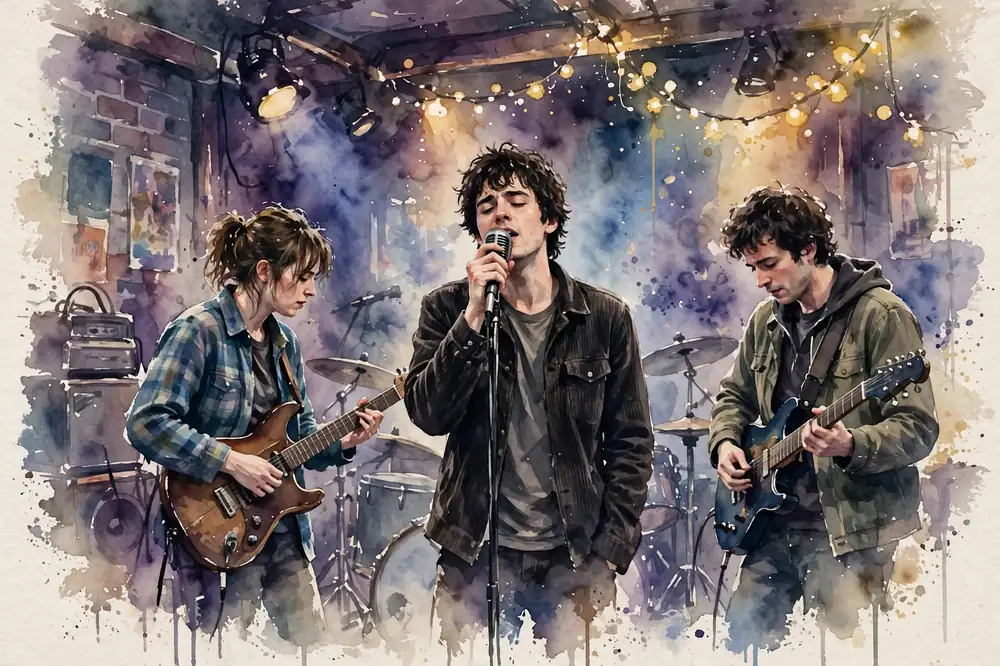
The most distinctive chapter in the music of Lisa Moorish came in the early 2000s, when she formed and fronted the indie electro-punk band Kill City, with Pete Jones. Kill City released the White Boys, Brown Girl EP and album, and were signed by Alan McGee’s Poptones label, a home that suited their raw, independent spirit. The band’s sound mixed punk energy, electronic textures and direct lyrics, giving her a chance to lead a group rather than support others, and to write and perform songs that reflected her own point of view after years of working for other artists.
Fronting Kill City allowed Lisa Moorish to show a different side of her voice, tougher and more confrontational than her pop singles, and the band became a cult favourite rather than a chart act. Indie bands of that era lived or died by live shows, small-label support and word of mouth, and Kill City built their reputation in that world, playing to audiences who valued attitude and originality over polish. For her, the band was also a statement of independence, because after a decade in the industry she was choosing her collaborators, her sound and her image, rather than fitting into a label’s plan for a solo pop singer.
After Kill City, Lisa Moorish spent several years primarily raising her children, before turning to DJing and acting work, a period that is less documented in detail but fits a familiar pattern for musicians who become parents. The music industry moves quickly, and stepping away to focus on family can make a return difficult, yet she kept connections in creative circles, including through theatre and songwriting projects. Those quieter years were not wasted, because they gave her life experience, perspective and new material, and they set up the later chapter in which she returned to recording with a clearer sense of what she wanted to say.
Motherhood, Family and a Daughter in the Spotlight
Family life has always been central to the story of Lisa Moorish, and she raised her daughter Molly, born on 26 March 1998, largely as a single mother, in circumstances that later became widely reported. Molly’s father is Liam Gallagher, the former Oasis frontman, and their daughter did not meet him until she was in her late teens, meeting for the first time in 2018 when she was twenty, according to contemporary interviews. Molly has said she felt no anger about that upbringing, and has spoken with gratitude for how her mother raised her, a tribute that says a great deal about the home her mother created away from the headlines.
The relationship between Lisa Moorish and her daughter changed in public view after Molly and Liam met, and Liam later wrote the song Now That I’ve Found You for his daughter, released on his 2019 album Why Me? Why Not. Molly went on to build a modelling career, working with major brands and magazines, and later changed her public name to Molly Moorish Gallagher, reflecting both parents in her identity. For a mother, watching a child enter the same public world that once shaped her own early career must bring mixed feelings, pride alongside protectiveness, and Lisa has supported Molly publicly, including celebrating her daughter’s pregnancy announcement in 2025.

Lisa Moorish is also the mother of a son, Astile, born in 2003, whose father is musician Pete Doherty, and that family story is part of her life without defining her music. Raising two children with different fathers, both musicians, while maintaining her own creative identity, required resilience, and she has rarely sought to turn family difficulties into publicity. Instead, she has kept her focus on her children’s wellbeing, on her own work, and on the friendships and creative partnerships that sustained her through years when the press was more interested in her relationships than in her songs.
A Return to Music and Later Life
The later career of Lisa Moorish took a welcome turn when she returned to songwriting and recording after a long break, working with producer Zoe Devlin Love and signing to Irvine Welsh’s Jack Said What label. Her album Divine Chaos, her first solo album for more than twenty years, was announced in 2024, with the single Sylvia, inspired by a photograph in which she was told she resembled American poet Sylvia Plath. The album drew comparisons to Grace Jones, Roisin Murphy and Nina Hagen, blending torch songs, electro and raw lyrical storytelling, and it showed a mature artist unafraid to mix genres and to write plainly about life.
That return was helped by an earlier invitation from friend Irvine Welsh, who asked Lisa Moorish to co-write and perform songs for the Trainspotting musical he was developing during the Covid period. Working on theatre songs gave her a different discipline, writing for characters and stories rather than only for herself, and it reconnected her with audiences in a live setting. The project also led to work on a play, The Divine Chaos of Starry Things, in which she took the lead role as French revolutionary Louise Michel, a part that gave the later album its name and showed her range as a performer beyond music alone.
What Her Story Means Today
For readers who want to follow the next generation, Molly Moorish Gallagher, the daughter of Lisa Moorish, has built her own modelling career and public profile, and her story is often told alongside her mother’s. Yet the two careers are distinct, and it is worth keeping them separate in the mind, because a daughter’s success does not erase a mother’s earlier work, just as a mother’s history does not define a daughter’s choices. The family connection is real and warm, but each woman has earned attention for her own work, in different decades and in different parts of the entertainment world.
It is also important not to invent a neat financial ending for Lisa Moorish, because no verified net worth figure is presented here, and online estimates vary too widely to repeat with confidence. What can be said with confidence is that she has worked steadily in music across four decades, from teenage club singles to Britpop backing vocals, from Kill City to a solo album in her fifties, and that longevity itself is an achievement in an industry that often discards older women. Her Wikipedia page, linked below, gathers the basic career outline, while the fuller story lies in the records, the band history and the recent return that proves her creative life did not end with her early fame.
In the end, the appeal of Lisa Moorish lies in persistence, in a voice that moved between scenes without losing itself, and in a life that balanced motherhood with artistry. She grew up in Brixton, sang on records that defined an era, led her own band, raised two children, and then came back to recording on her own terms, with songs that sound like they come from lived experience rather than from fashion.
For readers who discover her through her daughter, the reward is finding an artist worth listening to in her own right, and for music fans, her story is a reminder that some of the most interesting careers are the ones that keep going quietly, then surprise you all over again.
Sources and Further Reading
Readers who want a reliable outline of Lisa Moorish can consult her Wikipedia biography, which records her birth date, solo career from 1989, and Kill City years, and which is a useful starting point before exploring her later album. No further personal details are claimed here beyond what reliable profiles report, and where sources are thin, that thinness is stated rather than filled with invention. What remains is a singer, songwriter and mother whose work spans acid house to indie rock, and whose later return shows that creativity, like family, can be renewed at any stage of life.
Pingback: Molly Moorish Gallagher: 7 Amazing Facts About the Incredible Model