Celebrity
Susan Culpo: 7 Amazing Facts About the Incredible Mother and Musician

Behind a Miss Universe crown, a reality television family and a Rhode Island restaurant story stands a musician whose own training and discipline helped shape everything that followed, and the story of Susan Culpo deserves to be told in her own right. She is best known to the public as the mother of Olivia Culpo, Miss USA and Miss Universe 2012, but before that fame she was already a classically trained viola player, performing with respected orchestras and bringing music into a home where five children grew up hearing practice, rehearsal and performance as part of everyday life. Her influence is quieter than a pageant win, yet it runs through the family’s story in a lasting way.
What draws readers to Susan Culpo is the contrast between her serious musical background and her light-hearted television presence, since she appears on screen as a warm, funny mother who cheerfully admits she does not understand the modern world of influencing. That humour hides years of practice, because classical music demands patience, precision and long hours, qualities she passed on to her children whether they became musicians, models or business owners. She is not a celebrity chasing attention, but a mother and musician whose family happened to become famous, and that grounded quality is part of why audiences like her.
Table of Contents
The family at the centre of the story of Susan Culpo includes her husband Peter, a Rhode Island restaurateur, and their five children, Pete, Aurora, Olivia, Gus and Sophia, raised in Cranston, Rhode Island. Olivia, the middle child, became the most famous, but the family story is shared, shaped by music lessons, long meals, church and community life, and by parents who encouraged each child to follow a different path while staying close. It is that home, rather than any single television appearance, that explains why the Culpo name still feels familiar to so many readers.
A Musical Education and Early Training
The early musical life of Susan Culpo, whose maiden name is reported as Curran, began with serious classical training, and Classic FM has reported that she studied under the legendary conductor Leonard Bernstein. Training with a figure of Bernstein’s stature would have been demanding in every way, requiring not only technical skill on the viola, but also musical understanding, stamina and the ability to take direction from a conductor known for high standards. Whether readers know Bernstein’s work or not, the detail gives a sense of the level at which she was working as a young musician, far beyond casual school lessons or hobby playing.
As a young player, Susan Culpo performed with groups including the Boston Symphony and the Rhode Island Philharmonic Orchestra, according to profiles of the family, and those orchestras represent the professional world of classical music in New England. Playing in an orchestra is a team discipline, because each musician must listen, blend and follow a conductor while still playing with individual expression, and it teaches humility as well as skill. The viola itself is often described as the middle voice of the string family, warm and rich rather than showy, and that role suits a musician who values ensemble over solo spotlight, a trait that later showed in her family life as well.

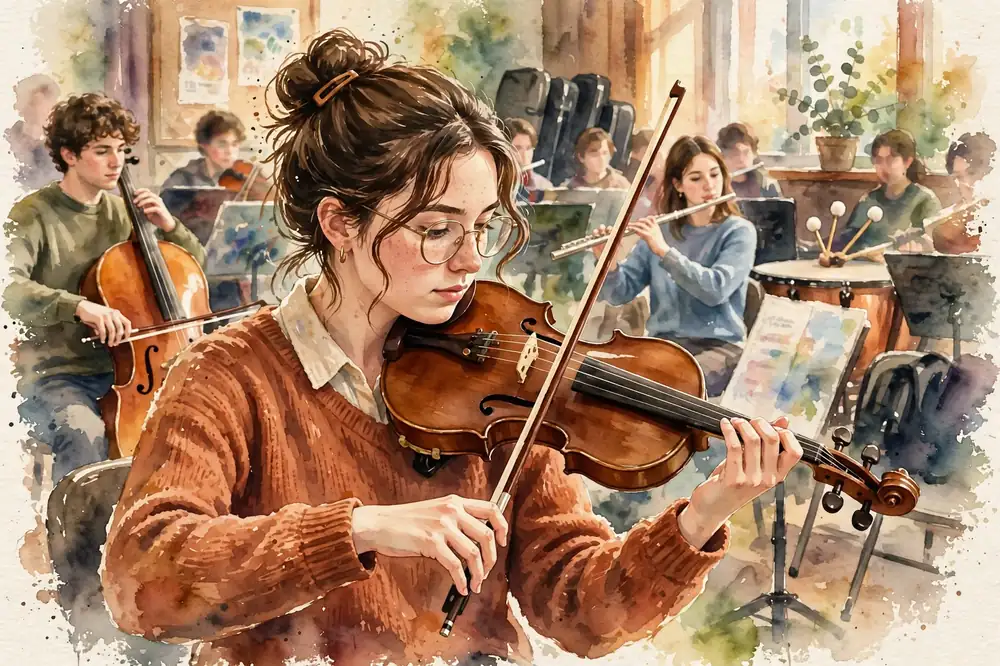
College orchestra life also brought Susan Culpo together with her future husband, Peter, a meeting that has been repeated in many profiles and that gives their family story a romantic, musical beginning. They met while playing in a college orchestra, he as a young man who would later become a restaurateur, she as a viola player already committed to music, and their shared love of performance gave them a common language from the start. It is a fitting origin for a family in which music would remain central, because the couple’s first connection was not fame or business, but rehearsal rooms, sheet music and the discipline of playing together.
Performing With Orchestras in New England
The professional music career of Susan Culpo centred on New England orchestras, where she played viola in ensembles that serve both concert audiences and local communities. The Boston Symphony connection, reported in family profiles, places her in one of America’s most respected orchestral traditions, while the Rhode Island Philharmonic Orchestra links her to her home state and to the musical life of Providence and Cranston. Those two worlds, a major Boston institution and a Rhode Island community orchestra, show a musician who could work at a high level while staying rooted in the place where she raised her family.
Playing classical music professionally also shaped how Susan Culpo approached motherhood, because orchestral life teaches planning, practice and patience, all of which transfer directly to raising children. A musician knows that progress comes from daily work rather than sudden inspiration, that a difficult passage must be practised slowly before it can be played quickly, and that a performance depends on everyone doing their part. Those lessons, learned in rehearsal rooms, later helped her guide five children through music lessons, school, sports and, eventually, public careers, without losing the calm that ensemble playing requires.
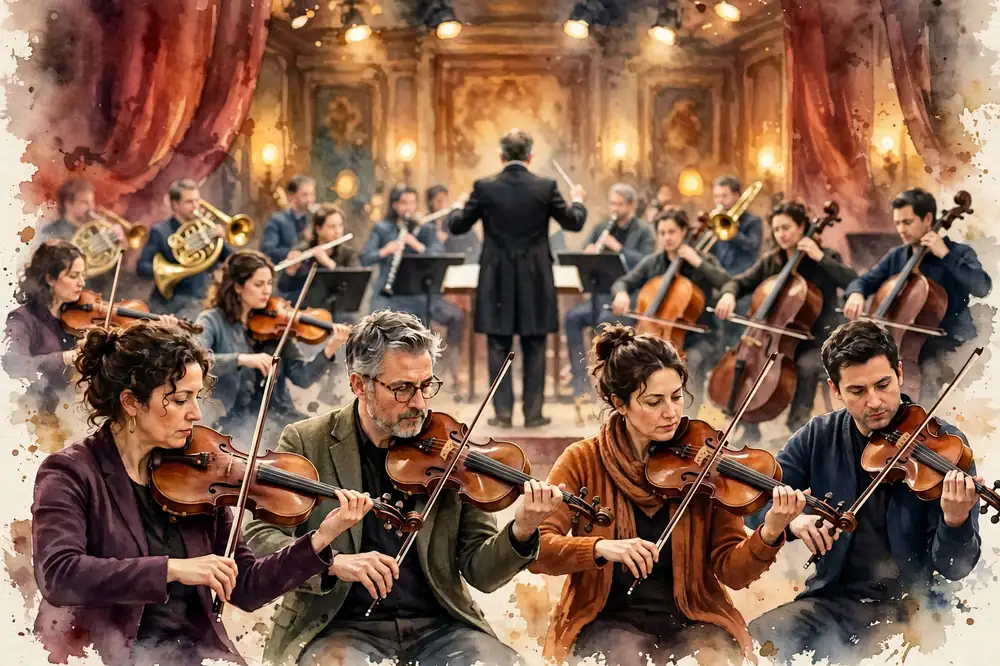
Some profiles describe Susan Culpo as a violinist rather than a viola player, and that variation is worth noting honestly, because public reporting on private musicians is not always precise about instruments. The most detailed music reporting, including Classic FM and Nicki Swift, identifies her as a viola player, and that is the description used here, while acknowledging that other summaries use the more general term musician or violinist. What is not in doubt is that she was a professional, classically trained string player, and that music was her profession before her children became famous, not a hobby adopted later for television.
Music Lessons That Shaped a Family
The practice routine that Susan Culpo brought into her home was, by all accounts, steady rather than dramatic, because classical training teaches that small, regular effort matters more than occasional bursts of enthusiasm. Children were encouraged to practise, to listen to recordings, and to attend concerts, not as punishment, but as part of a household where music was simply what people did. That routine gave them a sense of structure that carried into school and later work, even for children who did not become professional musicians, because they learned early that talent without practice fades quickly, while steady work builds confidence over time.
That approach also meant that Susan Culpo could support her children without pushing them into her own career, since she understood from experience that a child must find personal meaning in an instrument or a subject to stay with it. Olivia’s cello playing, for example, was serious and sustained, yet her mother did not insist that she become an orchestral player, and that freedom allowed Olivia to carry musical discipline into modelling, acting and business instead. In that sense, music lessons were less about producing another viola player, and more about teaching focus, listening and resilience, skills that serve any adult life, whether on stage, on camera or in a restaurant.
Raising Five Children in a Musical Home
The home that Susan Culpo built with Peter in Cranston’s Edgewood neighbourhood was, by many accounts, a musical one, with instruments, lessons and concerts woven into family life. Olivia began studying the cello in second grade and went on to play with the Rhode Island Philharmonic Youth Orchestra, the Rhode Island Philharmonic Chamber Ensemble and the Boston Accompanietta, among others, a path that began at home with a mother who understood practice. Other children pursued their own interests, but all grew up in a house where creativity was taken seriously, where showing up for rehearsal mattered, and where family meals and music were both treated as daily rituals rather than special occasions.
As a mother, Susan Culpo balanced that musical discipline with warmth, and profiles of the family often describe a close, Italian-Irish household where faith, food and humour mattered as much as achievement. She has Irish ancestry as well as Italian roots through marriage, and that heritage, combined with Rhode Island community life, gave her children a strong sense of identity before fame arrived. Raising five children is demanding in any circumstances, and doing so while maintaining a musical life and supporting a husband’s restaurant business required organisation, energy and a willingness to put family needs first, qualities that her children have publicly praised.
The Culpo Sisters and Life on Television
Television introduced Susan Culpo to a much wider audience in 2022, when she appeared with Peter in The Culpo Sisters, the TLC reality series following Olivia, Aurora and Sophia. In the show she played herself with humour and directness, famously saying, with Peter, that they did not know what an influencer was and were not influenced by it, a line that became one of the series’ most quoted moments. Viewers responded because she did not pretend to understand a world she had not grown up in, and because her confusion was affectionate rather than critical, showing a mother who loved her daughters while remaining honestly herself.
Appearing on reality television can be uncomfortable for a private person, but Susan Culpo treated filming as family time rather than as a bid for personal fame, and she did not use the show to launch a separate public career. She remained, in public reporting, a mother and musician first, appearing at family events, supporting her daughters’ work, and returning to Rhode Island life between filming. That restraint is consistent with her orchestral background, where the ensemble matters more than the individual, and it helps explain why audiences found her refreshing in a genre often criticised for self-promotion.
A Mother to Olivia and Her Sisters and Brothers
The relationship between Susan Culpo and her daughter Olivia is often described as close, supportive and musical, because Olivia’s cello training gave mother and daughter a shared language long before pageants. Olivia has spoken about growing up surrounded by music, with her mother as a professional player and her grandfather John Culpo as a world-class accordion player who performed at Carnegie Hall, according to Classic FM. That lineage, from grandfather to mother to daughter, shows music as a family inheritance, even though Olivia later chose modelling and acting over a full-time orchestral career, and it gives her pageant success a deeper backstory than beauty alone.
It is important not to confuse Susan Culpo with Olivia’s sisters, Aurora and Sophia, who are her daughters and who starred alongside Olivia in The Culpo Sisters, because Susan is the mother of all three, as well as of Pete and Gus. Aurora and Sophia have built their own influencing and business careers, and their mother has supported them publicly while keeping her own identity separate from theirs. That distinction matters for readers, because the Culpo family includes several public women, and Susan’s role is that of the musician mother who raised them, not a sister or peer competing for the same spotlight.
Grandmotherhood has added a new chapter for Susan Culpo, since Olivia married NFL player Christian McCaffrey in June 2024 and welcomed a daughter, Colette, in July 2025, according to contemporary reporting. Becoming a grandmother while still supporting adult children is a familiar milestone, and for a woman whose life has centred on family and music, it represents continuity rather than change. She remains the steady presence at family gatherings, the person who understands both the discipline of practice and the joy of celebration, and whose influence is now felt in a third generation.
What We Know, and What We Do Not Claim
For readers who want to follow the next generation, Olivia Culpo, the daughter of Susan Culpo, has her own story, from Miss Universe 2012 to modelling, acting and business, and her mother’s musical influence runs quietly through it. The link is not only about fame, but about values learned at home: practise daily, listen to others, show up for rehearsal and for family, and do not mistake attention for achievement. Those values are visible in Olivia’s own work ethic, in her restaurant partnership with her father, and in the close family bonds that television viewers saw in The Culpo Sisters.
It is also important to be honest about the limits of public information on Susan Culpo, because no reliable, verified net worth figure or birth date is presented here, and she has not published a personal biography with those details. She is a private musician who became known through her children, so the solid facts are her viola playing, her orchestral work, her marriage to Peter, her five children, and her television appearances with them. Readers who want background on the family can also consult Olivia Culpo’s Wikipedia page, which records her pageant wins and family details, while remembering that a mother’s story is best told through her own training and her family, not through guesswork.
In the end, the appeal of Susan Culpo lies in that balance between discipline and warmth, between concert halls in Boston and Rhode Island and family kitchens in Cranston, and between a private musician and a very public family. She trained seriously, played professionally, met her husband in an orchestra, raised five children in a musical home, and then, with humour, allowed television audiences to meet the mother behind the famous daughters. For readers in New England, she is a familiar local figure; for readers elsewhere, she is a reminder that behind every famous face there is often a parent who practised, listened, and kept the family in tune.
Pingback: Olivia Culpo Husband 2026: Marriage, Love Story, Family & Christian McCaffrey